

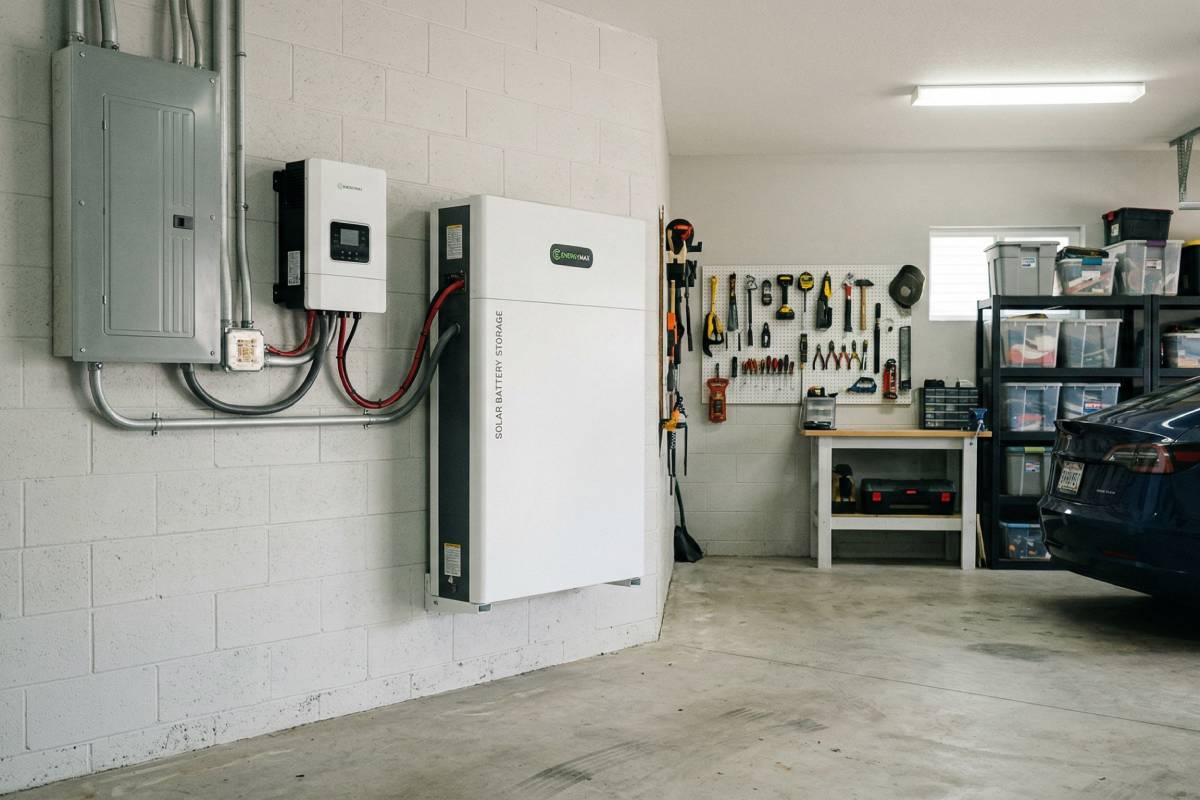
Solar panels generate power. Most households use that power instantly or send the surplus back to the grid for a shrinking feed-in tariff.
The problem is that the sun disappears at 6 pm, and your electricity consumption does not. Batteries solve that mismatch by storing what your panels produce during the day for use after dark. But “solar battery” is not a single product — it is a spectrum of electrochemical technologies with different performance ceilings, lifespan expectations, safety profiles, and cost structures.
Get the chemistry wrong, and you get an expensive box that underperforms within three years.
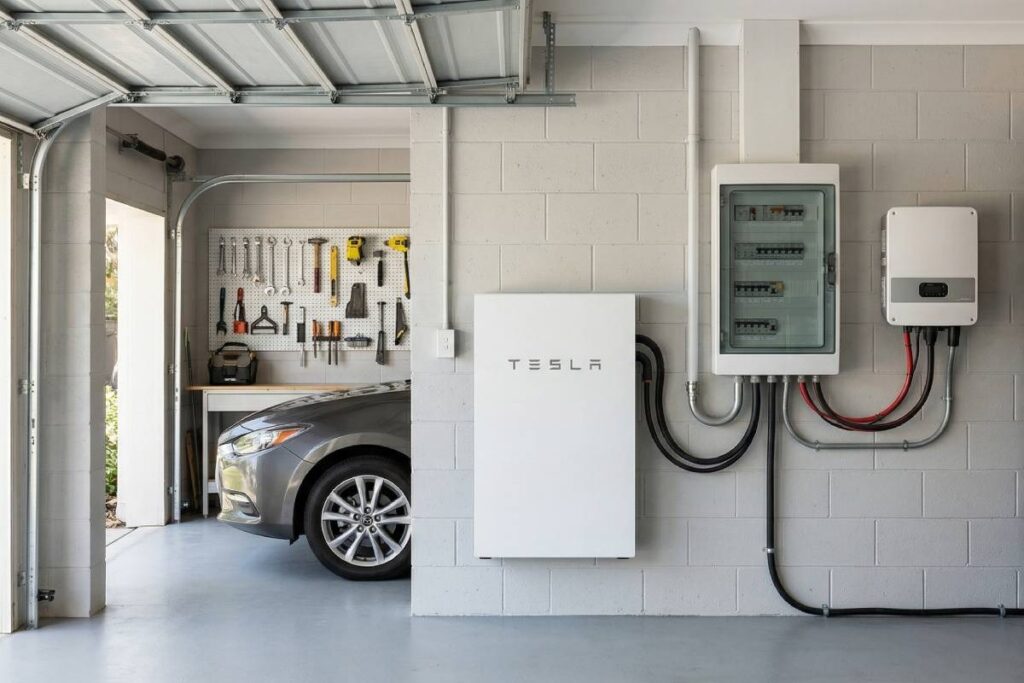
The Dominant Answer: Lithium-Ion
The overwhelming majority of solar batteries installed in homes and businesses today are lithium-based. That concentration reflects a decade of real-world performance data, falling manufacturing costs, and safety standardisation that other chemistries have not matched at scale.
Within the lithium category, two chemistries matter for residential solar:
- Lithium Iron Phosphate (LiFePO4 / LFP) — the current market standard for home storage
- Lithium Nickel Manganese Cobalt (NMC) — used in some higher energy-density applications
Understanding why LFP became the residential default requires understanding what actually determines whether a solar battery is worth the investment.
Why Chemistry Matters More Than Spec Sheets
A battery’s chemistry determines four things that directly affect your money and your safety: thermal stability, cycle life, usable depth of discharge, and how fast it degrades in heat. Spec sheets can be written to flatter almost any product. Chemistry cannot lie.
Lithium Iron Phosphate (LFP): The Residential Standard
LFP uses iron and phosphate in the cathode instead of cobalt or manganese. That substitution produces a battery that runs cooler under load, tolerates deeper discharge without accelerating degradation, and delivers cycle counts that most homeowners will never exhaust within a standard warranty period.
LFP cells cost approximately 30% less per kWh for stationary storage than other lithium chemistries, which is why they dominate the home battery market globally. You get the lowest cost-per-cycle of any currently viable residential option.
A practical scenario: a homeowner with a 10kWh LFP battery cycling daily at 80% depth of discharge will complete roughly 3,500 to 4,000 cycles before reaching the typical 70% remaining capacity threshold. That is close to a decade of daily use before meaningful replacement consideration.
Lithium NMC: Higher Density, More Thermal Scrutiny Required
NMC packs more energy into a smaller physical footprint — a genuine advantage in electric vehicles where weight and volume are critical constraints. In a wall-mounted home battery, that advantage is largely irrelevant. NMC runs hotter and carries a higher thermal runaway risk if cells are damaged or the battery management system is poorly implemented. Standards bodies have developed specific fire propagation testing protocols (UL 9540A) specifically because of NMC’s thermal behaviour in residential indoor installations.
Lead Acid: Specific Use Cases, Not General Purpose
Lead-acid batteries predate solar systems by over a century. Flooded lead acid (FLA) and absorbed glass mat (AGM) variants are still used in off-grid solar installations, particularly in rural and remote applications where upfront cost matters more than long-term cycle economics.
Where lead acid still makes sense:
- Remote off-grid sheds or cabins with low and infrequent loads
- Backup systems are cycled weekly or less
- Situations where the replacement cost calculation still favours lead acid over the asset’s service life
Where lead acid fails hard:
- Daily cycling — lead acid typically tolerates 500 to 800 cycles at 50% depth of discharge before significant capacity loss
- High-ambient-temperature environments, which accelerate electrolyte evaporation in flooded systems
- Any installation requiring maintenance-free operation over multiple years
A remote Northern Territory property running a pump station off-grid on lead acid batteries cycling daily will replace that battery bank every two to three years. The same capacity in LFP lasts close to ten. The “cheaper” upfront option frequently costs more over the system’s life when you account for replacement cycles and installation labour.
Emerging Technologies Worth Knowing, Not Yet Worth Buying
Flow batteries (vanadium redox) separate energy storage from power output using liquid electrolyte tanks. Capacity and power rating are independently scalable. Genuinely interesting at the grid and commercial scale. The footprint, maintenance complexity, and cost make them unsuitable for residential use today.
Sodium-ion batteries are entering commercial production as a cobalt-free alternative to lithium. The residential solar market has not adopted them at scale yet. Worth monitoring over the next three to five years.
Lithium titanate (LTO) offers cycle life exceeding 15,000 cycles and excellent cold-weather performance, but carries energy density penalties and a high cost per kWh. Used in niche long-life applications. Not a mainstream residential choice.
The Specs That Actually Determine Real-World Performance
| Specification | What It Means | LFP Typical | Lead Acid Typical |
| Usable Capacity | Energy accessible after DoD limit | 80–90% of rated | 40–50% of rated |
| Depth of Discharge | % of capacity safely usable | 80–90% | 50% |
| Cycle Life (to 80% capacity) | Full charge/discharge cycles | 3,000–6,000 | 500–800 |
| Round-Trip Efficiency | Energy out vs. energy in | 95–97% | 70–80% |
| Operating Temperature | Safe ambient range | -10°C to 50°C | 15–25°C optimal |
| Maintenance | Ongoing user actions needed | None | Periodic (FLA) |
Round-trip efficiency is the figure most commonly overlooked during purchasing decisions. A battery returning 75% of stored energy versus one returning 96% is a meaningful difference in how much of your solar generation you actually capture and use across a year. At daily cycling rates, that gap compounds.
The Battery Management System: The Variable No One Talks About
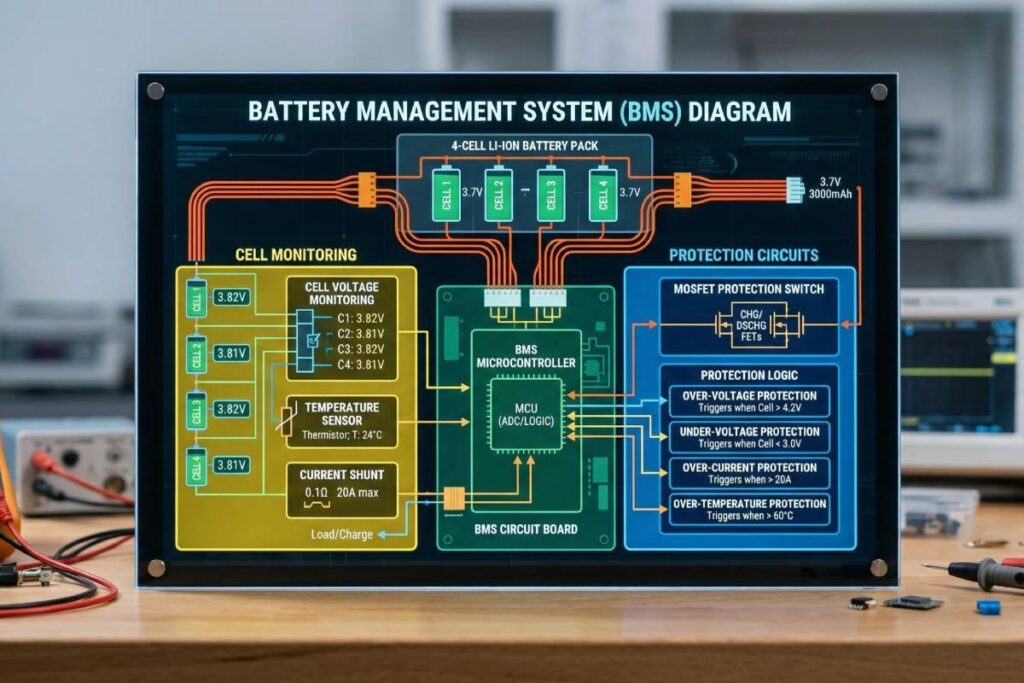
Every modern lithium battery ships with an integrated Battery Management System (BMS). The BMS monitors cell voltage, temperature, and state of charge in real time. It prevents overcharge, over-discharge, and thermal events. It is the reason quality LFP batteries can be warrantied for a decade and still deliver on that promise.
A poorly engineered BMS, not the cells themselves, is the most common cause of premature lithium battery failure. When two batteries share identical cell chemistry but one costs significantly less, you are almost always comparing BMS quality. Cells are a commodity. The BMS is the engineering.
How System Design Constrains Your Battery Options
The battery chemistry you want is also constrained by how your solar system is wired.
DC-coupled batteries
connect directly to the solar array through a hybrid inverter. Power moves from panels to battery without an AC conversion step, preserving efficiency. These systems require a battery compatible with the hybrid inverter’s communication protocol.
AC-coupled batteries
include their own internal inverter and connect at the AC side of your switchboard. They are compatible with almost any existing solar system, making them the default for retrofits. If you already have solar installed and are adding storage later, AC-coupled is typically your path.
The chemistry available to you does not change based on coupling type — both DC-coupled and AC-coupled products are dominated by LFP. The coupling decision affects installation cost and efficiency, not chemistry selection. The connection between a battery and a home’s switchboard is classified as licensed electrical work in Australia — not a task for an owner-builder, regardless of how straightforward the installer makes it sound.
Selecting the Right Battery: Three Questions That Cut Through the Noise
1. What is your daily energy deficit after solar generation?
Calculate how much you are drawing from the grid after sunset. Size your battery to that number, not to a round figure on a brochure. Oversizing wastes capital on capacity that will cycle partially at best. A home with failing wiring or an overloaded breaker box is not a safe foundation for battery installation — get the existing electrical system assessed before committing to storage.
2. Are you on-grid or off-grid?
On-grid homes benefit from fast-cycling LFP systems that arbitrage time-of-use tariff differences. Off-grid properties with irregular cycling patterns and generator backup may still find lead acid viable, particularly where the total system replacement cost over ten years is comparable.
3. What is the ambient temperature at your installation site?
Western Australia, the Northern Territory, and inland Queensland regularly see ambient temperatures that exceed the thermal comfort zone of some battery chemistries. LFP handles sustained heat better than NMC. Before committing to any system, verify the manufacturer’s operating temperature specification against the worst-case conditions at your actual site, not average conditions, worst case.
Summary
- Lithium Iron Phosphate (LFP) is the dominant battery chemistry for residential solar storage, delivering the best combination of cycle life, thermal stability, and cost per usable kWh for daily cycling applications.
- Lead-acid batteries remain relevant only for low-cycle, off-grid, or budget-constrained installations where a higher long-term replacement cost is an acceptable trade-off.
- Chemistry, depth of discharge, BMS engineering quality, and system coupling type together determine real-world performance. Understanding these four variables before speaking to an installer puts you in control of the conversation.
Discussion question: Given that LFP cycle life now exceeds most household mortgage periods at typical daily cycling rates, do you think the current 10-year warranty standard undersells what the technology is actually capable of delivering?

Commercial Solar Financing: PPA vs Loan vs Lease — Which One Screws You?
What Battery Is Used in Solar Systems? A No-Nonsense Guide

What Are Tree Reductions? What Are the Benefits of Tree Reduction?

Can You Transport Your Yacht Interstate Yourself?
Commercial Solar Financing: PPA vs Loan vs Lease — Which One Screws You?
What Battery Is Used in Solar Systems? A No-Nonsense Guide
What Are Tree Reductions? What Are the Benefits of Tree Reduction?